From Boiler Fixes to Garden Bliss: real stories, real results…
AI is far from the apocalyptic machine we’ve imagined in science fiction (at least not yet 😃).
With ChatGPT leading the way — gaining over 400 million users between February and October 2025 alone — it’s clear there’s more to it than just an “advanced Google Search.”
Personally, I see AI as an ultra-competent and dedicated Personal Assistant… who also happens to be terribly ignorant. It’s smart, fast, and capable — but only once you teach it what you need. That’s why prompting (giving instructions) matters.
For estate agents, this means we now have an extra set of tools to serve clients better — and one of them is particularly exciting as we continue to strengthen our online presence.
See… people might or might not exactly know how to use AI chats to their best advantage, so they have started to use it – ChatGPT, Gemini, Copilot, Grok and the likes – as a replacement for their favourite search engine.

When the battle used to be for the best ranking in Google searches through ads and SEO (Search Engine Optimisation), now the race is on to show up on AI-powered searches. And I am quite proud to announce that – thanks to a partnership with HomeSearch – LS Properties listings are now optimised to show up on searches done on ChatGPT and the likes.
The power of AI over a ‘regular’ search is that it interprets, compares, and recommends based on context. It explains the reasoning behind its suggestions and provides better-matched answers.
For instance, one of our listings in Woodley, Reading now appears instantly when users search through ChatGPT.
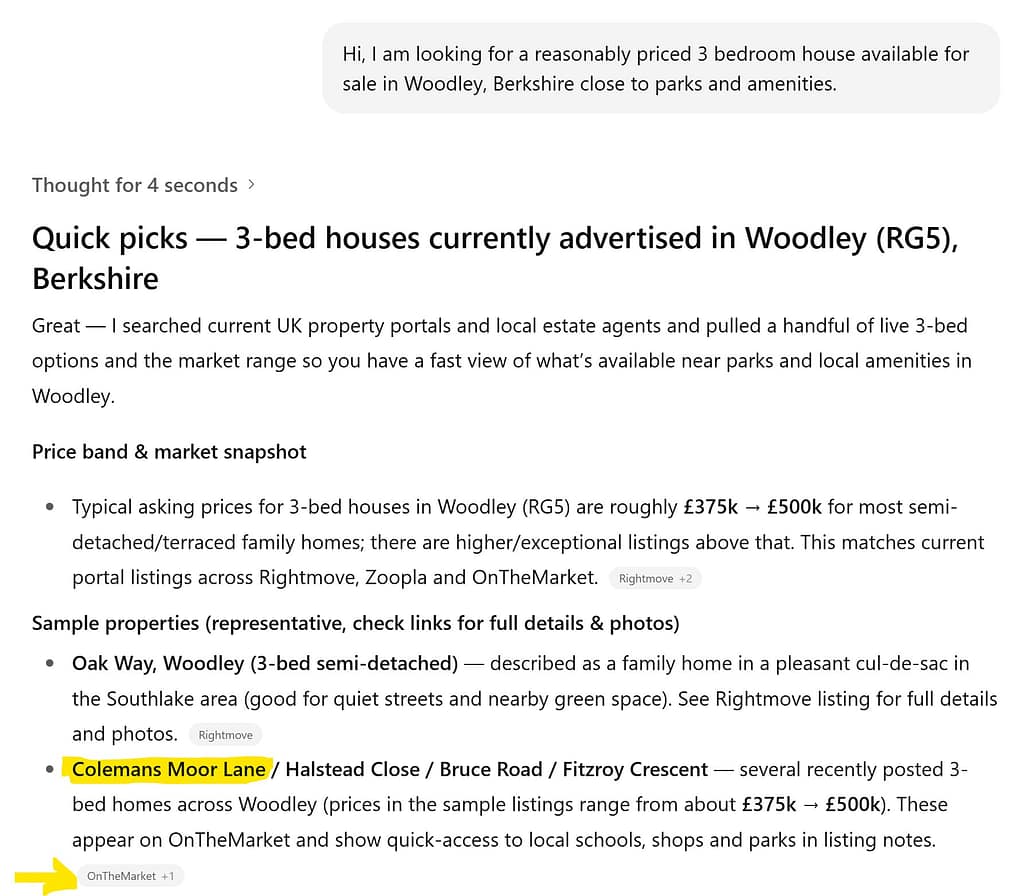
🏡 What AI Can Do for You as a Homeowner
That’s a glimpse of what AI can do for us as agents — but what about you as a homeowner?
With ChatGPT seeing such explosive growth, it’s worth exploring how it can help you maximise your home’s value, be it by solving small problems, or providing inspiration for your next project.
If you’re new to this:
- ChatGPT has a free plan that’s perfectly fine for beginners.
- And I’ll show you how to make the most of it through a few examples below.
🧰 Troubleshooting: Tackling That Snag You’ve Been Avoiding
Earlier this year, a couple of rooms in my house started to feel very hot even though the weather was mild outside. It did not take long to find out the radiators in these rooms were the culprit, but why?
I turned to my favourite PA – ChatGPT – dressed it with Mario the Plumber’s outfit with the following lines (also known as ‘prompt’) and went from there:
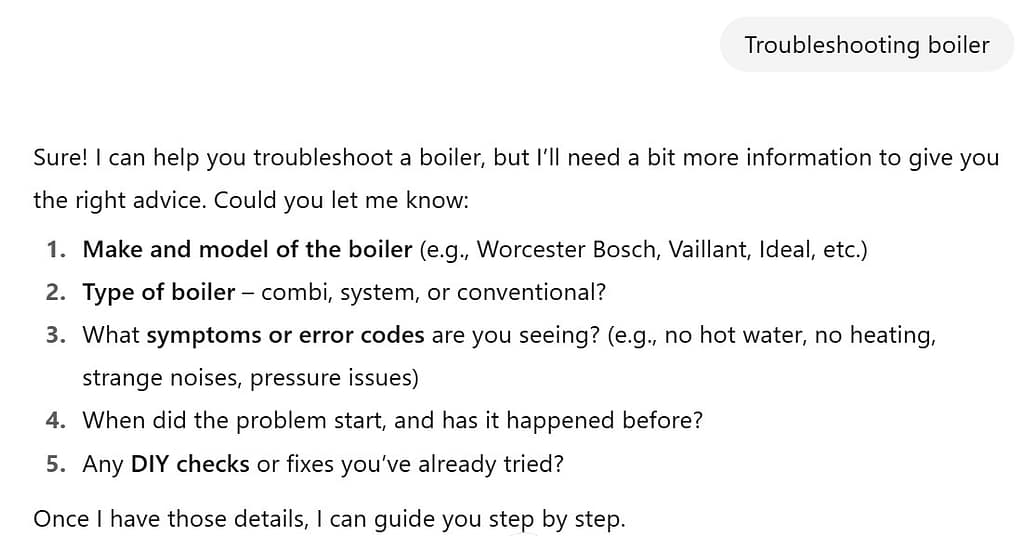
ChatGPT asked all the right questions about my heating setup — including the boiler’s make and model — and helped narrow down the likely causes. Because I was up for some DIY, it even walked me through safe troubleshooting steps.
Long story short: it helped me discover that a small actuator valve in my ground-floor heating circuit was stuck open. Once closed manually, the sauna days were over!
Had I needed to call a plumber, I’d still have saved time and money by knowing exactly what the issue was.
🎨 Restyle: Everyone Loves a Free Makeover
A well-executed redesign can be transformative — both visually and in terms of property value.
In one of my recent videos, I demonstrated how to use Zoopla’s Redesign feature to restyle any space in a listing (click here if you want to try it). It’s surprisingly satisfying — and slightly addictive — to see rooms instantly reimagined in different styles.
But what if your home isn’t listed online? You can still have fun experimenting with AI design tools. They all work similarly: upload a photo, choose a room type and style, and watch the transformation.
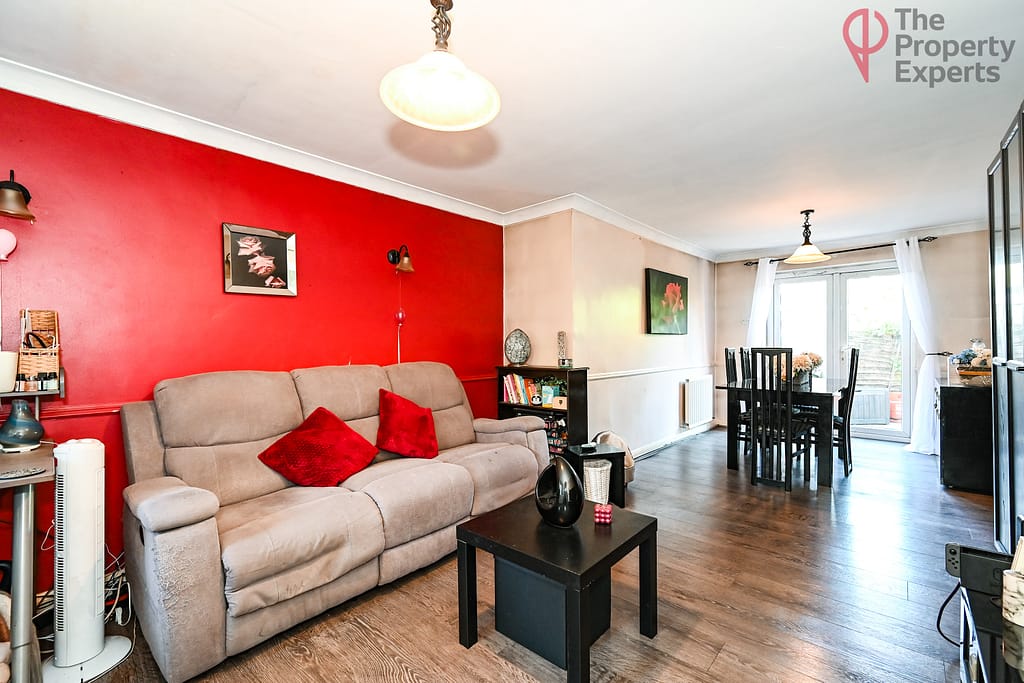
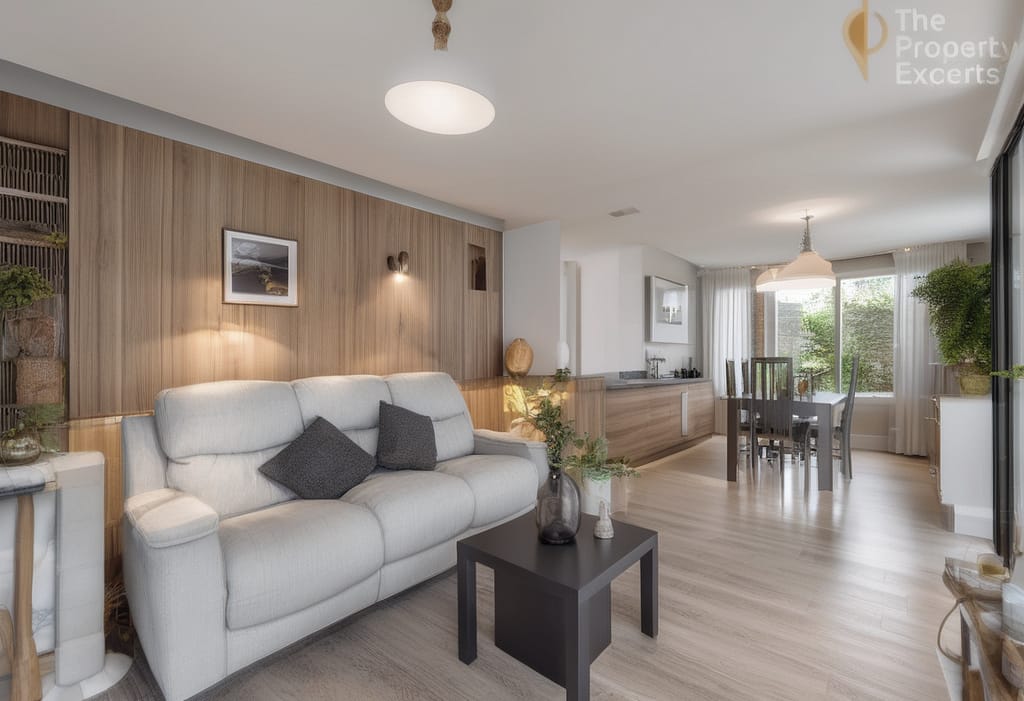
Here’s the same space reimagined using four different tools:
- The starting point — A dual purpose living and dining space
- RoomGPT.io— A warm and cosy makeover (though AI creatively added a sink near the dining area!)
- HomeVisualizer.ai — A bold, modern look… with a staircase to nowhere 😀

- VisualizeAI.pro — Scandinavian minimalism, complete with a new window (sadly facing the garage!)

- Roomvo — A sleek, modern update that preserved the room’s dual purpose.

You will find out that AI does not get it always right or might be extremely creative… e.g. adding stairs or doors to a wall. So the best use is as a source of inspiration rather than the generation of a complete turn key project.
🧩 The Prompt Structure: How to Get the Best Out of AI
My first illustration of a prompt engaging in a conversation with ChatGPT about my boiler issue would be highly criticised – and rightly so – by AI amateurs and experts alike.
A prompt is simply the instruction or message you give to an AI tool (like ChatGPT) to tell it what you want.
To get the best of your chats with AI, it is highly recommend to follow a structure that looks like so:
- Role — “Who should AI be?”
This sets the context for your request. By assigning a role, you tell AI how to think before it responds.
👉 Example: “Act as a property marketing expert” or “as an experienced gardener.”
💡 Why it matters: It shapes the perspective, vocabulary, and type of advice you’ll get. Without a clear role, the response can be too general. - Action — “What do you want it to do?”
This defines the task or objective.
👉 Example: “Write a property listing,” “suggest home staging ideas,” or “compare renovation options.”
💡 Why it matters: AI needs direction — the more precise the task, the closer the result will be to what you actually need. - Format — “How should the answer be delivered?”
This tells AI what shape the response should take.
👉 Example: “In a bullet list,” “as a social media caption,” or “as a checklist.”
💡 Why it matters: It saves time and avoids reformatting later. A clear format makes it instantly usable. - Tone — “How should it sound?”
This controls style and personality.
👉 Example: “Friendly and reassuring,” “professional and polished,” or “in plain English.”
💡 Why it matters: The right tone ensures the message connects — especially important when writing to buyers, neighbours, or clients. - Specifics — “What details should it include?”
These are key facts or preferences that make the output relevant.
👉 Example: “My home is a 1930s semi in Woodley,” or “I want ideas that cost under £1,000.”
💡 Why it matters: AI works best when it knows the context. The more relevant details you provide, the more tailored the response becomes. - Questions — “What else should AI know before preparing an answer?”
Invites the AI to clarify before answering.
👉 Example: “Ask me about my DIY skill level before suggesting fixes.”
💡 Why it matters: AI fills in gaps with guesses. Encouraging it to ask questions avoids surprises — and produces more accurate results.
See the example below…

🌿 Garden Planning: Your AI Gardening Partner
The garden is not my nemesis but I’ll admit that gardening isn’t my strongest suit either. My planting success rate is… modest. But AI has become my secret helper.
From picking the wrong plant for the climate to finer details like the orientation, how to seed, fighting slugs or matching the pH of the soil… there are lots of factors to take into account. And here again AI can be your best supporter.
By setting the scene using the RAFTSQ prompt structure above and explaining your goals (with photos if you wish), AI can create a tailored seasonal garden plan for your property.
Here’s a prompt you can copy, paste, and personalise:
Role: You are an expert landscape designer with knowledge of seasonal planting, garden aesthetics, and property value.

Action: Create a planting scheme that balances beauty, low maintenance, and curb appeal throughout the year.

Format: Provide a month-by-month or seasonal breakdown of plant choices, with short notes on colours, heights, and care tips. Present in a clear, easy-to-read list.

Tone: Warm, knowledgeable, and approachable — written for a prestige homeowner who wants their garden to look elegant and well cared for, but doesn’t want overly technical jargon.

Specifics:

The garden is in Thames Valley, UK (mild climate, seasonal changes).

The scheme should include perennials, shrubs, and some flowering plants to give year-round appeal.

Prioritise plants that enhance kerb appeal and frame the property well.

Mix evergreen structure with seasonal bursts of colour.

Focus on options that don’t require intensive maintenance.

Questions (to tailor the scheme further):

You will ask me more questions about:

My garden, its size, orientation and the areas I would like to prioritise (front entrance, patio, borders, lawn edges)

The look I am aiming for, e.g. a more formal look (structured, symmetrical) or an informal one (natural, flowing).

Whether there are any other uses I am planning on doing with my garden. E.g. incorporate edible plants (herbs, fruit trees) as part of the design, scent experience, entertain guests, etc.
✨ Closing Section: From Curiosity to Confidence
AI may feel like new territory, but in truth, it’s just another tool — one that rewards curiosity.
Whether you use it to diagnose a heating issue, restyle your living room, or plan your garden, AI can help you save time, make better decisions, and unlock your home’s potential.
⚠️ Important: as advanced as AI might look, it DOES make mistakes. So don’t trust everything that AI tells you, be critical and always double check information before proceeding.
In the next editions of The Prestige Collection, I’ll continue exploring practical ways to use technology to elevate your home — without losing the human touch that makes it truly yours.
💬 Have you tried using AI for something at home? we’d love to hear about your experience — leave a comment below, send us an email to contact@lsdlv.com or share this post with a friend who might enjoy experimenting too.